
On this page
Finding twelve people is easy. Finding twelve people who will opt in through your link, install an Android app they have never heard of, and keep using it for 14 straight days is the actual job. This guide covers how many to recruit, where real testers come from, what to say to them, and how to onboard them so your opt-in count is real on day one.
Work out your real number
More margin is better if your audience is hard to reach, and there is no Play Console penalty for a larger list. Email lists hold up to 2,000 addresses each, a track can use up to 50 lists, and Google Groups have no user limit at all.
Where real testers come from
- Your warm network: friends, former colleagues, and people in your industry who genuinely fit the app's audience.
- Communities you already belong to: niche subreddits, Android forums, Discord servers, and local meetups where your users actually gather.
- Your own audience: an existing mailing list, social following, or waitlist, even a small one, converts because they already know you.
- In-person contact: developer meetups and user groups, where asking someone to try your app takes thirty seconds.
- Indirect sources: other founders, newsletter swaps, or relevant Slack and Telegram groups where asking is welcome.
An outreach message that gets replies
The three ingredients are what the app does, what the tester gets, and the size of the ask. Vague messages like 'can you test my app?' get ignored, because people cannot estimate the effort. Be explicit that it needs an Android device, a Google Account, and a few minutes here and there.
Onboard so the opt-in is real
Publish your release first
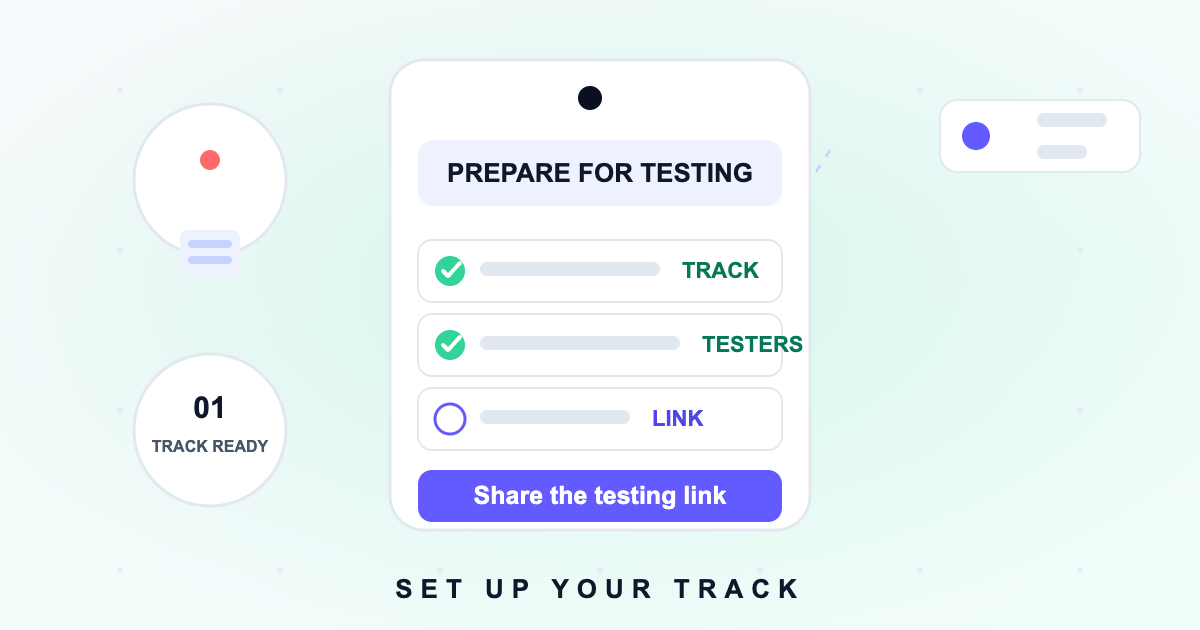
The shareable opt-in link only appears once your release is published on the closed track, so recruit in parallel with your release review and send links when the track is live.
Send the link with one instruction
Tell testers to open the link, accept the tester explanation, and install the app. Asking them to reply once they have completed opt-in gives you confirmation that the invitation actually converted.
Give them a first task
Point them at one flow to try immediately. A tester who does something in the first hour is far more likely to still be around on day 10.
If your network is smaller than your target and your launch date is fixed, recruiting becomes the critical path. AppsTestLab supplies vetted, real testers as part of its managed closed testing service, including the opt-in confirmation and engagement follow-up that keep a window from collapsing halfway through.
Need real testers, fast?
We recruit genuine testers and run your full 14-day closed test, with opt-in confirmations tracked for you.
Talk to us on WhatsAppFrequently asked questions
How many testers should I recruit at minimum?
Recruit more than 12. Fifteen to twenty is a sensible target so opt-outs and no-shows never take you below the 12 continuously opted-in testers you need.
Can testers be outside my target audience?
They can, but engagement will be worse. Testers who understand your app's purpose use it more and report more useful feedback, which protects both your window and your quality signal.
Do testers need to be in my country?
Testers need to access your app through the testing track in a country where your app is available. Keep your rollout countries in mind when recruiting.
Is it okay to pay people to test?
Paying for installs or using fake accounts is a policy violation. Incentivizing honest effort from real people you have vetted, such as a thank-you gift rather than a per-install fee, is a different matter, but when in doubt keep it simple and transparent.
Sources & references
Official Google documentation- Set up an open, closed, or internal testsupport.google.com
- App testing requirements for new personal developer accountssupport.google.com
These links open Google's official Play Console Help pages used to verify this guide. AppsTestLab guidance is independent and not affiliated with Google.
Get help doing this